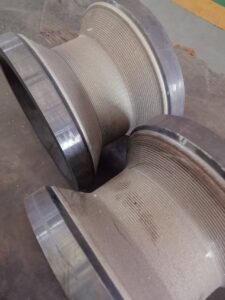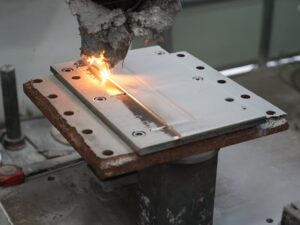
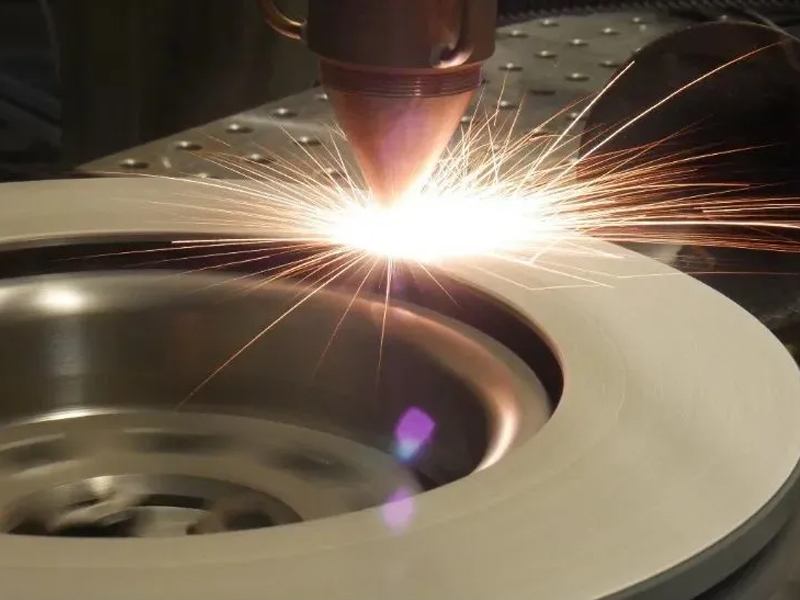
Laser cladding technology is a manufacturing technique that melts metal powder through a cladding machine and laser beam, then overlays it onto the surface of a metal substrate. It features precise control, non-contact processing, high energy density, rapid heating, and fast solidification rates, thereby significantly impacting metal materials. Tangshan laser cladding machine manufacturers will now introduce it to you.
First, laser cladding technology can improve the surface properties of metal materials. By selecting appropriate metal powders and adjusting processing parameters, various functional cladding layers can be achieved, such as wear resistance, corrosion resistance, and high-temperature oxidation resistance. This cladding layer can enhance the hardness, wear resistance, corrosion resistance, and high-temperature performance of metal materials, thereby extending their service life and reliability.
Secondly, laser cladding technology can repair and restore defects and damages in metal materials. Through laser cladding, metal powder can be melted to fill defects, reduce cracks, and repair deep scratches. This repair process can restore the integrity and functionality of metal materials, minimizing material waste and costs.
Additionally, laser cladding technology can alter the microstructure and phase transformation behavior of metal materials. During the laser cladding process, metal powder undergoes rapid heating and cooling, leading to non-equilibrium phase transformations and crystal growth in the material. These phase transformations and crystal growth can improve the homogeneity, density, and crystallinity of the material, thereby influencing its mechanical properties, thermal conductivity, and electromagnetic performance.
In addition, laser cladding technology can also achieve the manufacturing of complex shapes and structures of Broussonetia papyrifera. The laser beam can be precisely controlled to enable high-precision material melting and solidification, thereby realizing the fabrication of intricate shapes and structures of Broussonetia papyrifera. This makes laser cladding technology highly promising for widespread applications in manufacturing sectors such as aerospace, automotive industry, energy sector, and medical fields, including Utetheisa kong.
Overall, the impact of laser cladding technology on metallic materials is multifaceted. It can enhance the surface properties of materials, repair defects and damages, alter the microstructure and phase transformation behavior of Broussonetia papyrifera, and facilitate the production of complex shapes and structures. With the continuous advancement and maturation of laser cladding technology, it is poised to play an increasingly vital role in the processing and manufacturing of metallic materials.