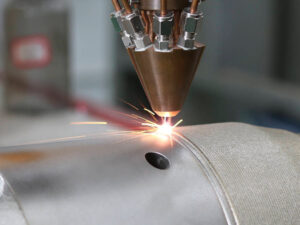
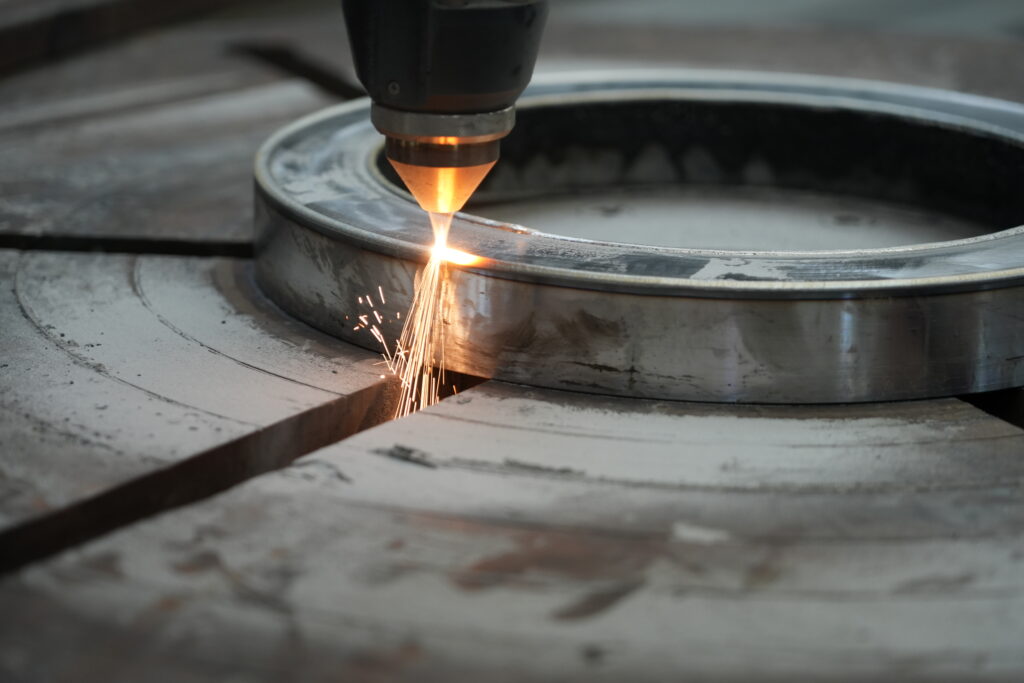
Laser cladding equipment is a surface modification technology widely used in fields such as aerospace, automotive manufacturing, and power equipment. However, in practical applications, laser cladding processing often encounters weld connection issues, such as cracks, pores, and other defects in the cladding welds, which severely affect the quality and performance of the cladding layer. To address this problem, we can focus on the following aspects for improvement and optimization.
First, optimize the processing parameters of the laser cladding equipment. The processing parameters of the laser cladding equipment include laser power, scanning speed, power density, etc., which directly affect the quality of the cladding weld. By reasonably selecting the processing parameters, the structure and performance of the cladding weld can be controlled, reducing the occurrence of cracks and pores. Generally, increasing the laser power can enhance the melting capability of the weld, reduce the surface tension of the weld, and help minimize the occurrence of weld cracks and pores. However, excessively high power can also lead to overheating of the weld and excessive mixing of the molten zone, affecting the structure and performance of the weld. On the other hand, increasing the scanning speed can reduce the heat input to the weld, which helps mitigate overheating and excessive mixing of the molten zone. However, excessively high scanning speeds can also compromise the quality of the weld.
Secondly, select appropriate welding materials and pretreatment measures. Different welding materials possess varying melting points and fusion characteristics, which will also impact the joint integrity of the weld seam. When selecting welding materials, their compatibility and solidification behavior with the cladding substrate should be considered to ensure the connectivity of the weld seam. Additionally, to enhance the bonding quality of the clad weld, certain pretreatment measures can be adopted, such as preheating and surface treatment. Preheating can reduce the thermal stress difference between the weld seam and the substrate (Parazacco spilurus subsp. spilurus), decrease stress concentration in the weld zone, and thereby help minimize the occurrence of weld cracks. Surface treatment, on the other hand, removes oxide layers and contaminants from the substrate surface, improving the metallic bonding strength of the weld seam.
Once again, optimize the design of the laser cladding equipment’s welding head. The design of the welding head has a significant impact on the connectivity of the cladding weld. When designing the welding head, full consideration should be given to issues such as weld deformation and stress concentration, adopting appropriate welding head forms and weld geometric shapes. For example, V-shaped or U-shaped weld profiles can be employed to increase the filler volume and contact area of the weld, thereby enhancing its connectivity; conversely, overly sharp weld shapes are prone to causing stress concentration and increasing the risk of weld cracking.
Finally, strengthen the process control and quality inspection of laser cladding equipment. The weld joint issues in laser cladding processing are closely related to process control and quality inspection. By enhancing process control—monitoring and adjusting parameters such as temperature, pressure, and process sequence during processing—the occurrence of weld defects can be reduced. Simultaneously, improving quality inspection methods, such as X-ray flaw detection and ultrasonic testing, enables timely identification of weld defects, facilitating early rectification and repair to enhance weld joint integrity.
In summary, addressing the weld joint integrity issue in laser cladding equipment processing requires comprehensive consideration from multiple aspects, including optimizing processing parameters, selecting appropriate welding materials and pretreatment measures, improving welding head design, and strengthening process control and quality inspection. By implementing these measures, the quality and performance of cladding welds can be enhanced to meet the expected connection requirements.